

You are using an out of date browser. It may not display this or other websites correctly.
You should upgrade or use an alternative browser.
You should upgrade or use an alternative browser.
What's Inside Your Grubee GT5?
- Thread starter bairdco
- Start date


bairdco
a guy who makes cool bikes
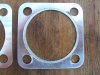
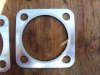
it's hard to tell from these pictures, but the head gasket was unevenly "torqued," but if you look closely, you can see it's crushed more in two opposite corners than the others.
it also had a different amount of washers under the crappy acorn nuts to take up the space. one had 2 flat washers and a lock, and the rest had one flat and a lock.
it also had a different amount of washers under the crappy acorn nuts to take up the space. one had 2 flat washers and a lock, and the rest had one flat and a lock.
Attachments
bairdco
a guy who makes cool bikes
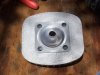
here's a before and after shot of the combustion chamber on the slant head.
the casting is super rough, which could cause hot spots, as well as a nice surface for carbon build-up to stick to.
in the secod pic, i also lapped the head with sandpaper on glass. you can see the uneven-ness in the before pic.
the casting is super rough, which could cause hot spots, as well as a nice surface for carbon build-up to stick to.
in the secod pic, i also lapped the head with sandpaper on glass. you can see the uneven-ness in the before pic.
Attachments

Last edited:
Poopyboogin420
New Member
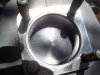
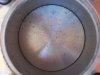
I'm reversing some new Grubee GT5 motors, and found some nice metal surprises inside:
My gt5 needs a new jug, piston and rings because of those bits. My first major learning experience with China Gas quality control. Oh well. Now I know.
bairdco
a guy who makes cool bikes
if installed un-touched, right outta the box, you could have some serious problems, including premature engine failure, lowered compression due to metal shavings gouging the cylinder walls and piston, and just all-around poor performance.
i'll post pics of the finished product soon, after i get some new nuts for the head. i ain't using those lousy acorns.
i'll post pics of the finished product soon, after i get some new nuts for the head. i ain't using those lousy acorns.
Poopyboogin420
New Member
if installed un-touched, right outta the box, you could have some serious problems, including premature engine failure, lowered compression due to metal shavings gouging the cylinder walls and piston, and just all-around poor performance.
i'll post pics of the finished product soon, after i get some new nuts for the head. i ain't using those lousy acorns.
You're tellin me. I was lucky it lasted as long as it did. On the bright side, I get to tear into it and do some hands on learning. I'm going to replace the acorns, too. But yeah, that's exactly what happened. I was riding, then ting, ting, no compression.
Poopyboogin420
New Member
it's hard to tell from these pictures, but the head gasket was unevenly "torqued," but if you look closely, you can see it's crushed more in two opposite corners than the others.
it also had a different amount of washers under the crappy acorn nuts to take up the space. one had 2 flat washers and a lock, and the rest had one flat and a lock.
Wow. They went all out on yours. Mine only had lock washers on three of the studs.


GearNut
Active Member
I had one that had a newspaper or magazine stuffed in the crank case. I have no clue why that was done, just to mess with us I guess.
Maybe one of the assemblers did not want to get caught reading on the job lol.
I have heard of shady used car lots filling automotive differentials and manual transmissions with saw dust to conceal and quiet worn out gears and bearings.
Perhaps it was one assembler's idea to sound deaden the internal racket?
Still......newspaper in the crankcase? Wow! That's pretty bad.

Poopyboogin420
New Member
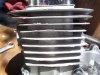
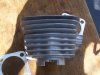
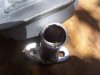
Here's some photos to show what happens if you don't go through your entire engine before running it.

That gouge is enough to render an engine useless.
That gouge is enough to render an engine useless.
Poopyboogin420
New Member
Here's the piston...

This engine has about 600 or so miles on it, btw. So they don't last very long if you don't prep it properly. I think this should be brought to the attention of people looking to buy these, because I had no idea when I bought this one, obviously.
This engine has about 600 or so miles on it, btw. So they don't last very long if you don't prep it properly. I think this should be brought to the attention of people looking to buy these, because I had no idea when I bought this one, obviously.

rustycase
Gutter Rider
I don't quite know how to put it... integrity is something many of have learned not to expect when purchasing any number of products.
Warranty and reputation of the vendor become more important than specifics of the product itself.
Seems like it's all a crapshoot!
Somewhere along the line I have come to a dubious conclusion that a used item is a proven product.
I recently invested in a 3 in 1 welding machine on the bay.
Blue and red were far out of reach, don't mind saying...
With only two flaws, it functioned ok... The vendor contacted the service person and I made a wiring switch to rectify one problem, the second problem required replacement of the main control board.
Luxorgoods got me that part within a week. I'm happy!
Vendor reputation is very important to me.
Best
rc
Warranty and reputation of the vendor become more important than specifics of the product itself.
Seems like it's all a crapshoot!
Somewhere along the line I have come to a dubious conclusion that a used item is a proven product.
I recently invested in a 3 in 1 welding machine on the bay.
Blue and red were far out of reach, don't mind saying...
With only two flaws, it functioned ok... The vendor contacted the service person and I made a wiring switch to rectify one problem, the second problem required replacement of the main control board.
Luxorgoods got me that part within a week. I'm happy!
Vendor reputation is very important to me.
Best
rc

DaveM
New Member
Hey Bairdco,
That head you are lapping, it needs to be lapped until the ring that you have surfaced is flat with the rest of the head surface otherwise the head will distort when you torque it down.
Sit the head gasket on the head where ever the head gasket covers this needs to be flat. Did you lap the top of the barrel as well? I even lapped both of the inlet and exhaust manifold surfaces and both the inlet manifold and exhaust manifold as well, there was not a flat surface anywhere.
The metal inlet manifold that came with the Gt-5 kit was not round where the carby bolted on so when I tightened the carby one of the tabs broke. I ended up getting a aluminum manifold. The area where the carby bolts to on the aluminum manifold is machined and is perfectly round. No broken tabs.
I also washed out the crank area with fuel/2 stroke mix to make sure to wash out any swarf.
Regards,
DaveM.
That head you are lapping, it needs to be lapped until the ring that you have surfaced is flat with the rest of the head surface otherwise the head will distort when you torque it down.
Sit the head gasket on the head where ever the head gasket covers this needs to be flat. Did you lap the top of the barrel as well? I even lapped both of the inlet and exhaust manifold surfaces and both the inlet manifold and exhaust manifold as well, there was not a flat surface anywhere.
The metal inlet manifold that came with the Gt-5 kit was not round where the carby bolted on so when I tightened the carby one of the tabs broke. I ended up getting a aluminum manifold. The area where the carby bolts to on the aluminum manifold is machined and is perfectly round. No broken tabs.
I also washed out the crank area with fuel/2 stroke mix to make sure to wash out any swarf.
Regards,
DaveM.
Poopyboogin420
New Member
I also washed out the crank area with fuel/2 stroke mix to make sure to wash out any swarf.
Regards,
DaveM.
do you just shake it up? I'm doing this right now to my engine and I'm debating on cracking the crankcase open or just washing it out as you described. I don't want to half ass it, but if I can avoid taking it apart, I wouldn't mind at all.
 does it get everything out?
I am kind of intimidated when it comes to getting into the lower end, plus I lack some of the tools needed to do it...
Last edited:
Poopyboogin420
New Member
With the quality that these kits have nowadays, it is wise to disassemble and inspect your engine internals before use. At this point perhaps the vendors should start shipping these 'kits' with the engine completely disassembled. It seems that the buyer ends up taking everything apart anyway, so it would save us the trouble of initial disassembly, and maybe save them some labor costs of putting the engines together in the first place.
That would be nice...at the very least they could let you know it needs to be done. But then I could see some people being turned off from diving into a complete engine build on there first time around. I think there is a business opportunity here for someone that could sell these engines after they have gone through them, clean up the castings and such. It would cost more, but the reassurance of your engine longevity would be worth it IMHO.
Isn't that what ThatsDax does? IDK? Seems like good idea...
GearNut
Active Member
I have rinsed a few engines out that burned through the piston crown,
When California switched to oxygenated gasoline, quite a few folks never re-jetted their carburetors to account for the extra oxygen in the combustion process. Result: waaay too lean.
Anyways, I digress.
Rinse the cases out by mounting it up in a jig that will hold it up-side-down.
I just used rope wrapped around the engine and hung them from a 2x4 laid across 2 sawhorses.
The method I used for making a sprayer was complicated and over thought. It also used an air compressor which I know alot of folks here may not have.
A much simpler method is to use a small diameter hose attached to lid of an old (well rinsed) dish soap bottle or whatever you can find that will hold a decent volume and be easily squeezed.
Stick the hose way up inside the cases at various places , hold the bottle up-side down, and squeeze it. Be sure to rinse every surface inside the cases very well and collect the rinse product in a tub or deep drip tray. Do not let it drain on the ground.
I re-use it over and over. If you store it in a paint can all the junk will settle to the bottom and you can skim off clean solvent from the top.
When California switched to oxygenated gasoline, quite a few folks never re-jetted their carburetors to account for the extra oxygen in the combustion process. Result: waaay too lean.
Anyways, I digress.
Rinse the cases out by mounting it up in a jig that will hold it up-side-down.
I just used rope wrapped around the engine and hung them from a 2x4 laid across 2 sawhorses.
The method I used for making a sprayer was complicated and over thought. It also used an air compressor which I know alot of folks here may not have.
A much simpler method is to use a small diameter hose attached to lid of an old (well rinsed) dish soap bottle or whatever you can find that will hold a decent volume and be easily squeezed.
Stick the hose way up inside the cases at various places , hold the bottle up-side down, and squeeze it. Be sure to rinse every surface inside the cases very well and collect the rinse product in a tub or deep drip tray. Do not let it drain on the ground.
I re-use it over and over. If you store it in a paint can all the junk will settle to the bottom and you can skim off clean solvent from the top.
Poopyboogin420
New Member
I have rinsed a few engines out that burned through the piston crown,
When California switched to oxygenated gasoline, quite a few folks never re-jetted their carburetors to account for the extra oxygen in the combustion process. Result: waaay too lean.
Anyways, I digress.
Rinse the cases out by mounting it up in a jig that will hold it up-side-down.
I just used rope wrapped around the engine and hung them from a 2x4 laid across 2 sawhorses.
The method I used for making a sprayer was complicated and over thought. It also used an air compressor which I know alot of folks here may not have.
A much simpler method is to use a small diameter hose attached to lid of an old (well rinsed) dish soap bottle or whatever you can find that will hold a decent volume and be easily squeezed.
Stick the hose way up inside the cases at various places , hold the bottle up-side down, and squeeze it. Be sure to rinse every surface inside the cases very well and collect the rinse product in a tub or deep drip tray. Do not let it drain on the ground.
I re-use it over and over. If you store it in a paint can all the junk will settle to the bottom and you can skim off clean solvent from the top.
Brilliant. So this is good enough to remove all the junk in there without having to crack it open, I assume. Thanks, Gearnut!!